Nahttypen—A Complete Guide to Seam Types (and When to Use Them)
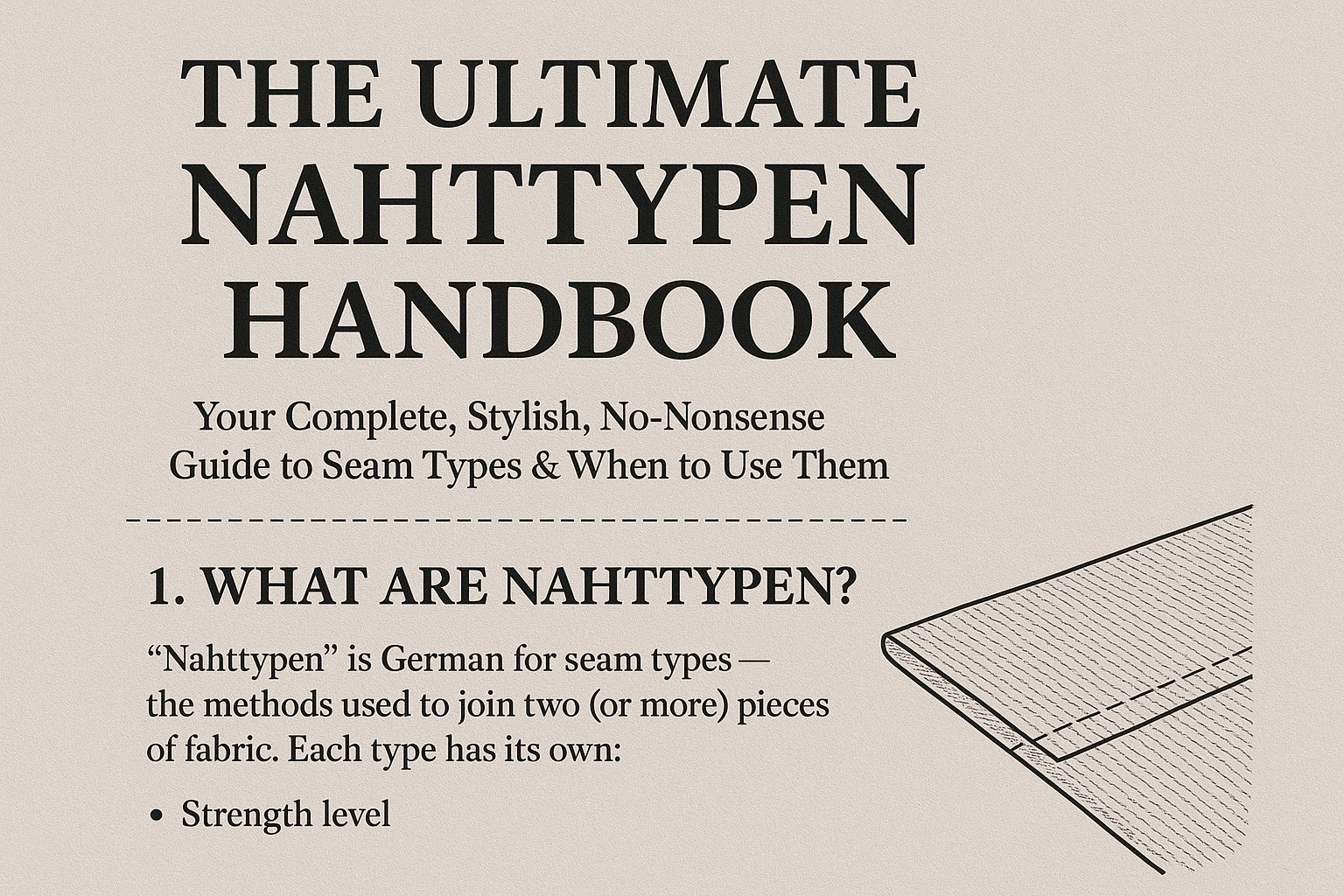
Your Complete, Stylish, No-Nonsense Guide to Seam Types & When to Use Them
Seams are the quiet architecture of every garment. They’re the unseen bones, the structural grid, the invisible engineering that turns flat cloth into something that hugs, drapes, moves, and lasts. Yet most people—even many beginners who sew—treat seams like background noise.
Not you.
You’re here because you want to sew smarter, sew cleaner, and sew like someone who understands the craft behind the craftsmanship.
In the world of sewing, the secret to a garment that looks good and lasts lies not only in the fabric — but in the seams. That’s where Nahttypen — literally “seam types” in German — come in. These are the various ways fabrics can be stitched together, each technique carrying its own strengths, weaknesses, aesthetic, and ideal use case.
Mastering Nahttypen is like having a tailor’s secret language: choose wisely, and your project flows, drapes, endures. Choose poorly — and you’re inviting puckers, frays, or structural failure.
Welcome to your complete guide to Nahttypen — the seam types that shape every stitch you’ll ever make.

What Are Nahttypen?
“Nahttypen” is German for seam types — the methods used to join two (or more) pieces of fabric. Each type has its own:
- Strength level
- Flexibility
- Aesthetic finish
- Bulk
- Compatibility with specific fabrics
- Complexity
- Longevity
If stitches are the handwriting, seams are the sentence. They give structure. They tell the garment how to behave.
Why Seam Type Matters
- Durability & Fit: The seam determines how well a garment holds together under stress, how it molds to the body, and how it moves.
- Fabric & Function: Lightweight silk, stretchy knits, heavy denim — each demands a different seam strategy.
- Finish & Aesthetic: From clean-hidden seams in delicate blouses to rugged, visible seams in jeans, the seam style sets the tone.
- Edge Protection: Many seams also protect raw fabric edges from fraying or unraveling — critical for garment longevity. (coats.com)
A good seam does three things:
1. Protects and strengthens the fabric
Some fabrics fray like a bad breakup (looking at you, raw linen). The right seam prevents future heartbreak.
2. Controls the garment’s shape and movement
A seam can give softness and drape — or rigid structure. Your choice decides everything.
3. Makes the inside look as good as the outside
A beautifully finished seam? That’s couture. That’s confidence. That’s the difference between handmade and homemade.
In short: seams are not an afterthought. They are the backbone. Knowing Nahttypen turns sewing from craft to craft + science.
Common Nahttypen & Their Uses
Here’s a breakdown of some of the most widely used and versatile seam types — when they shine, and when they don’t.
Plain Seam (Geradstichnaht)
The workhorse of sewing — a straight stitch joining two fabric pieces along their edges. Simple, clean, and suitable for most everyday garments. (MasterClass)
- Best for: Lightweight to medium-weight fabrics (shirts, blouses, skirts). (Elegant Creator)
- Pros: Quick, minimal bulk, straightforward.
- Cons: Raw edges inside may fray — often needs finishing (overlock, binding, pinking). (Wikipedia)
Double-stitched Seam (or Reinforced Seam)
A variation on the plain seam — two lines of stitching instead of one, giving extra strength. Great when durability matters.
- Best for: Garments under stress — trousers, bags, heavy garments.
- Pros: Extra reinforcement.
- Cons: Slightly more work; seam allowance still exposed unless finished.

French seam
Elegance meets practicality: this seam encloses raw edges inside, giving a neat, clean finish inside and out. Ideal for delicate fabrics and garments where comfort and finish matter.
- Best for: Lightweight fabrics like silk, chiffon, organza; lingerie, fine blouses.
- Pros: No exposed edges, polished interior, professional look.
- Cons: Uses more fabric and time; can be bulky on heavy fabrics.
Flat-felled seam (sometimes “Felled seam”)
A powerhouse of strength and longevity: the fabric edges are folded and stitched flat, encasing raw edges and producing a durable, low-bulk seam. (Wikipedia)
- Best for: Heavy fabrics — denim, canvas, jeans, workwear.
- Pros: Resistant to fraying, strong, clean interior and exterior, ideal for high-stress seams.
- Cons: More complicated to sew; can add stiffness.
Lapped Seam
Instead of placing fabric pieces edge-to-edge, one piece overlaps another for stitching — often used when dealing with thick, non-fraying materials like leather, vinyl, or heavy synthetics. (ABC Seams®)
- Best for: Leather goods, bags, heavy outerwear, thick fabrics.
- Pros: Reduces bulk, good for curved or irregular edges, reliable for tough materials.
- Cons: Exposed edge overlap — may need finishing or binding for aesthetics.
Other Useful Types & Finishes
- Bound Seams / Bound Edges: Use bias tape or fabric strips to encase raw edges — ideal for lightweight or delicate fabrics, visible edges, or reversible garments. (ABC Seams®)
- Overlock / Serged Seam: Often used in industrial or knit-fabric work — trims and secures edges in one step to prevent fraying. (Wikipedia)
- Zigzag / Stretch Seams: Useful for stretchable fabrics (jerseys, knitwear) to allow flexibility without breaking stitches.
Choosing the Right Seam: A Checklist
Before you thread your needle (or fire up the machine), ask yourself:
- What fabric am I using? Light (silk, chiffon) → French or bound seams. Heavy (denim, leather) → Flat-felled, lapped, overlock.
- Will it stretch or move a lot? If yes → stretch-friendly seams like zigzag or overlock.
- Do I want raw edges hidden or visible? Hidden → French, bound, flat-felled. Visible and decorative → topstitching, bound edges.
- What’s the garment’s purpose? Everyday wear, heavy use → strong seams. Delicate garments or couture → neat, fine finishes.
- Do I need flexibility (knits) or structure (denim, canvas)? Match seam accordingly.

Mistakes to Avoid — and Sewing Like a Pro
- Skipping Seam Finish: Leaving raw edges can lead to fraying. Always finish plain seams with serging, binding, or pinking.
- Wrong Needle or Thread: Heavy fabrics need sturdy needles & threads; light fabrics need finer ones. Test on scraps first.
- Ignoring Fabric Behavior: Stretchy knits sewn with rigid seams will pucker or break — use flexible seam types.
- Not Pressing Seams: Proper pressing reduces bulk, ensures alignment, and gives a more professional finish. (Wikipedia)
Quick-Reference Cheat Sheet
| Seam Type | Best For | Strength | Bulk | Difficulty |
| Plain Seam | Everyday garments | ⭐⭐ | Low | Easy |
| Double Stitch | Stress areas | ⭐⭐⭐⭐ | Low | Easy |
| French Seam | Delicate fabrics | ⭐⭐ | Medium | Medium |
| Flat-Felled | Jeans, heavy fabric | ⭐⭐⭐⭐⭐ | Medium | Hard |
| Lapped Seam | Leather, vinyl | ⭐⭐⭐ | Medium | Medium |
| Overlock | Knits | ⭐⭐⭐⭐ | Low | Easy (machine) |
| Zigzag | Stretch fabrics | ⭐⭐⭐ | Low | Easy |
Final Thought: Nahttypen Is Your Sewing Superpower
Whether you’re a hobbyist stitching your first skirt or a pro tailoring heavy indigo denim, Nahttypen offers a seam for every story you want to tell with your fabric. Under-sew, and a garment falls apart; over-sew? It becomes stiff and uncomfortable. But choose wisely — and your creation becomes much more than fabric and thread. It becomes craftsmanship.
So thread that needle, pick your seam wisely — and sew with purpose.