Cesta Roman: History, Meaning, and Life Along the Roads of Ancient Rome
Introduction
The term “Cesta Roman“ has gained increasing attention in historical, cultural, and educational discussions. Although it does not refer to a single, officially named Roman city, it has come to symbolize something far more meaningful: the Roman road system and the towns that grew beside it.
Cesta Roman represents the lifeline of the Roman Empire—its roads, settlements, trade routes, and daily life. These roads were not merely paths for travel; they were instruments of empire-building, cultural exchange, and long-term urban development.
This article examines the significance, history, lifestyle, and contemporary relevance of Cesta Roman, providing a comprehensive and accurate understanding rooted in archaeology and historical research.
What Does “Cesta Roman” Mean?
The phrase Cesta Roman is derived from:
- “Cesta” – meaning road or path in several Slavic languages
- “Roman” – referring to Ancient Rome
Together, the phrase is commonly used today as a conceptual term representing Roman roads and the towns that developed alongside them.
Rather than a single location, Cesta Roman refers to:
- Roman road settlements
- Infrastructure-based towns
- Centers of trade, military movement, and civic life
It is often used in modern writing to describe how Roman civilization functioned at ground level—where people lived, traded, traveled, and interacted.
Historical Development of Cesta Roman
Early Origins (3rd–1st Century BCE)
Before Roman expansion, many areas consisted of small tribal settlements near rivers or crossroads. When Rome expanded its territory, it introduced engineered roads to control movement, communication, and trade.
Once a road was built, development followed quickly:
- Military outposts secured the route
- Waystations (mansiones) served travelers
- Markets and homes formed nearby
- Small villages evolved into towns
By the late Republic, these settlements had become structured Roman communities with:
- Grid-style streets
- Forums
- Administrative buildings
- Commercial zones
This marked the birth of what we now call Cesta Roman.
The Golden Age (1st–3rd Century CE)
The height of Roman prosperity brought rapid growth to road towns.
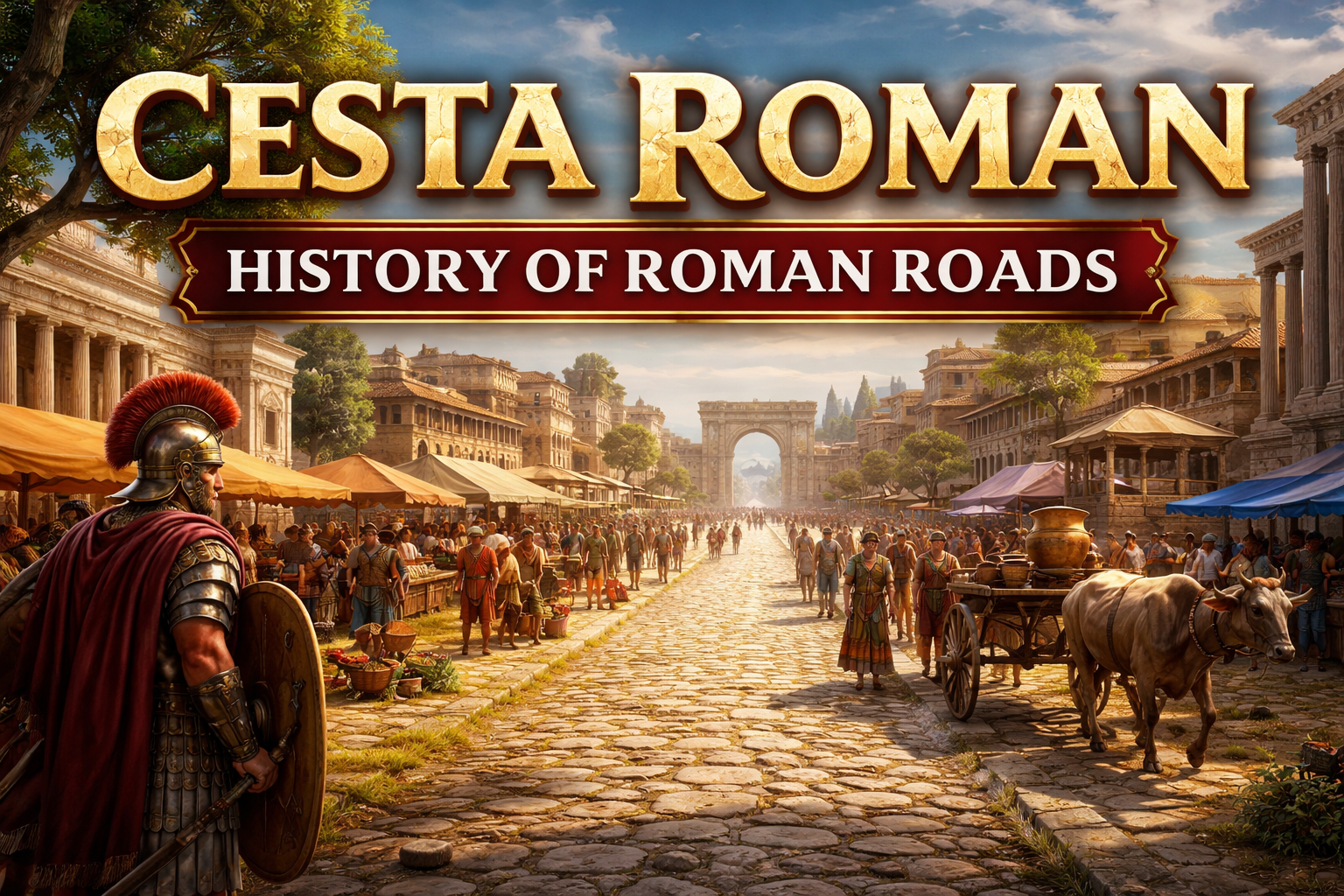
A typical Cesta Roman settlement included:
- A forum for trade and governance
- Public baths for hygiene and social life
- Temples dedicated to Roman and local gods
- Shops and workshops lining major roads
- Inns and stables for travelers and merchants
These towns flourished because Roman roads ensured:
- Reliable trade routes
- Military protection
- Constant movement of people and goods
Many such towns housed several thousand residents and served as regional economic hubs.
Decline and Transformation (4th–6th Century CE)
As the Roman Empire weakened, so did its infrastructure.
Key changes included:
- Declining road maintenance
- Reduced long-distance trade
- Abandonment of public buildings
- Shrinking urban populations
Formerly prosperous towns became fortified villages or were gradually abandoned. Stones from baths and temples were reused for walls and homes. By the early Middle Ages, many Cesta Roman settlements existed only as ruins.
Daily Life in a Cesta Roman Town
Urban Layout and Housing
Roman towns followed strict planning principles:
- Straight roads in a grid pattern
- Central forum
- Residential and commercial zones
Housing types included:
Domus
- Large private homes
- Owned by wealthy families
- Inner courtyards and decorative mosaics
Insulae
- Apartment blocks for common citizens
- Shops on the ground floor
- Crowded and often unsafe
Wealthier citizens lived near the forum, while poorer residents occupied upper floors along busy roads.
Work, Trade, and Economy
Life in Cesta Roman revolved around the road.
Common occupations included:
- Merchants and traders
- Blacksmiths and potters
- Innkeepers and stable workers
- Farmers selling goods in town markets
A typical day involved:
- Early morning trade
- Midday meals and rest
- Afternoon baths or socializing
The constant flow of travelers kept the local economy active.
Food, Baths, and Leisure
Food
- Bread, porridge, beans, and vegetables
- Olive oil, wine, and cheese
- Street food from thermopolia
Baths
- Central to social life
- Used for bathing, exercise, and conversation
- Open to most social classes
Entertainment
- Dice games and taverns
- Local festivals
- Theatre and small gladiatorial events
Religion and Community Life
Public Worship
- Temples dedicated to Jupiter, Mars, Mercury
- Public sacrifices during festivals
- Civic rituals in the forum
Private Worship
- Household shrines (lares and penates)
- Daily offerings for protection and prosperity
Festivals brought together all social classes, strengthening community identity.
Engineering and Architectural Significance
Roman roads were marvels of engineering:
Layered Construction
- Stone foundation
- Gravel and lime
- Compacted sand
- Stone paving
This design allowed:
- Efficient drainage
- Heavy traffic resistance
- Longevity exceeding 2,000 years
Roman surveyors used advanced tools to build remarkably straight roads, many of which remain in use today.
Economic and Strategic Importance
Cesta Roman enabled:
- Rapid military deployment
- Efficient taxation
- Empire-wide trade
- Cultural integration
It was the backbone of Roman dominance and administrative control.
Cesta Roman in the Modern World
Today, Cesta Roman represents:
- Ancient infrastructure excellence
- Archaeological heritage
- Foundations of modern road systems
Many European highways still follow Roman routes. Cities like Rome, Paris, and London owe their layout to Roman planning principles.
Why Cesta Roman Still Matters
Cesta Roman remains relevant because it represents:
- Long-term planning
- Sustainable construction
- Efficient connectivity
- Civilization through infrastructure
It teaches that great societies are built not only on power, but on roads, organization, and accessibility.
Conclusion
Cesta Roman was far more than a road—it was the framework of an empire. Through its towns, trade routes, and engineering brilliance, Rome connected millions of people across continents.
Even today, its influence remains visible beneath our feet and within our cities.
To understand Cesta Roman is to understand how civilization moves, grows, and endures.
Frequently Asked Questions (FAQ)
What is Cesta Roman?
A term used to describe Roman road systems and the settlements that developed alongside them.
Was Cesta Roman a real city?
No. It is a conceptual term representing Roman road towns.
Why were Roman roads so durable?
They used layered stone construction and precise engineering.
Are Roman roads still used today?
Yes. Many modern roads follow their original paths.
What was their main purpose?
Military movement, trade, administration, and communication.
Where can Roman roads still be seen?
Italy, Spain, France, the UK, Turkey, and North Africa.
Also read more about Innøve: Driving Innovation in a Changing World in 2026